Workshop Title:
Advances in Clean Energy Production and CCUS Technologies
Date:
January 27th, 2023 (GMT+9)
Organizer:
GSES, Tohoku University
Keywords:
- Hydrogen
- hydrothermal
- CO2 storage
- industrial waste
- recycling
Workshop Chair:
Personal Bio:
Jiajie Wang is an Assistant Professor at Graduate School of Environmental Studies, Tohoku University, Japan. Her main research focuses on geo-resources and energy, and in recent years, she has been conducting research on such as CO2 capture, utilization, and storage (CCUS) technology, water-rock interactions, clean energy production, as well as other related topics within the field of geochemistry and environmental technology development. Efficient CCUS technologies have been obtained through elucidating and applying the mechanisms of carbon storage and hydrogen energy production during hydrothermal alteration of rocks. The results have been published in 23 academic papers in peer-reviewed journals such as Journal of CO2 utilization and International journal of Hydrogen Energy. Her research is funded by the Japan Society for the Promotion of Science, National Natural Science Foundation of China, etc.
Workshop Description:
Background:
With the urgent need to create a carbon-neutral society, the development of clean energy production techniques to replace the fossil fuel, and CO2 capture, utilization, and storage (CCUS) techniques have attracted increasingly widespread attention. Although there have been many related mature approaches, one the main challenge for their application is the insufficient cost-efficiency. Here, we will introduce some advanced research and applications for the hydrogen energy production and CCUS, which applying geochemical mechanisms, and using nature resources (e.g., rocks, geothermal fluid) and waste resources, which are expected to be applied in large scale and will significantly contribute to the realizing of a carbon-neutral society.
Goal / Rationale:
How to efficiently generate clean energy in an environmentally friendly way, and how to storage huge CO2 in low-cost way are the main challenges for creating a sustainable carbon-neutral society. The applying of natural geochemical reactions and phenomenon, and use of natural resources and waste resources are potential promising solutions to these challenges. Here, we invited several young pioneer researchers who have obtained important achievements in the field of energy production and CO2 capture, utilization, and storage (CCUS) through geochemical approaches. Through sharing research progresses and ideas, we aim to provide multidisciplinary opinions and methodologies for energy production and CCUS, as well as to create a general future vision of a promising carbon-neutral society.
Scope and Information for Participants:
This workshop provides and forum for sharing advanced research and technologies especially on the development of clean energy production and CCUS technologies from multidisciplinary and diverse environmental geoscience aspects. The scope of the research topic includes but not limited in: environmental geochemistry, water-rock interactions, sustainability, mineral and energy resources exploration and recovery. The contributors are expected to address the main questions and challenges of using natural and/or industrial wastes resources for sustainable carbon-neutral society creation. New ideas and practical techniques are welcome, and the technique as well as economic feasibilities are expected to be elevated through discovering and addressing the potential challenges.
Highlights:
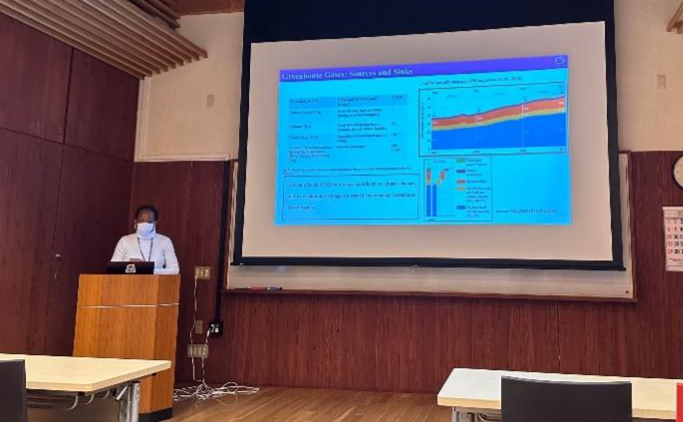
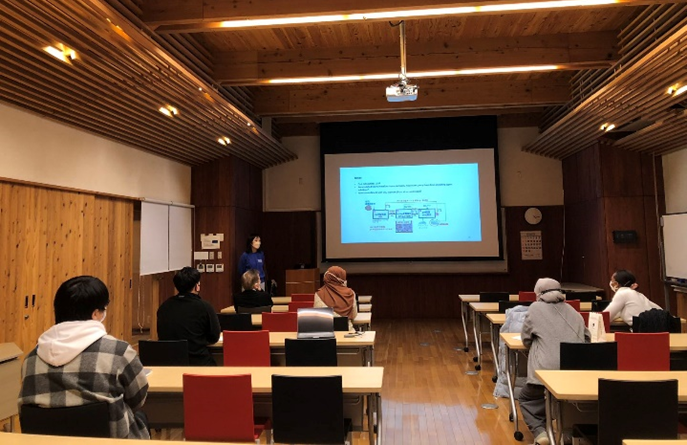
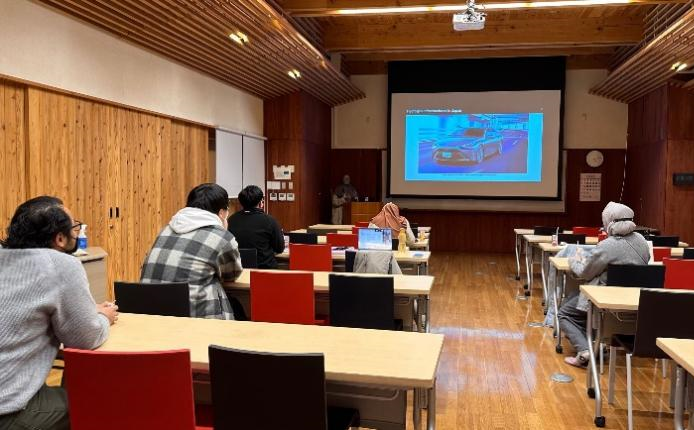
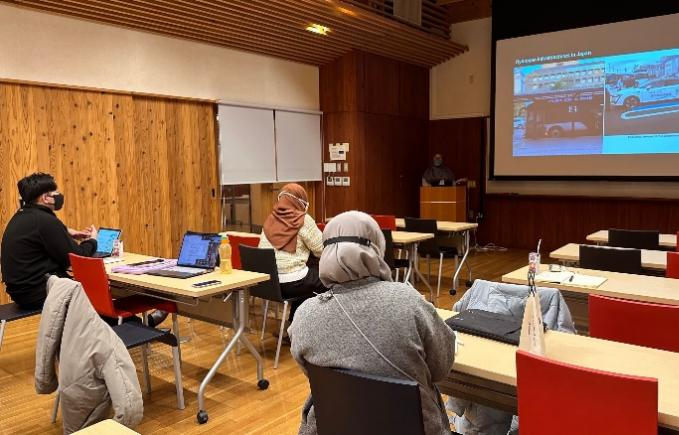
The "Advances in clean energy production and CCUS technologies" workshop was successfully conducted on Jan. 27, 2023, at Tohoku University, Japan. Four presenters gave impressive presentations, and 10 researchers attended the workshop. The workshop was aimed at providing an overview of energy production and CO2 capture, utilization, and storage (CCUS) technologies developments. Presenters shared opinions on 3 efficient CO2 storage system designs, new finding in carbon behaviors in natural geological environments and its contribution to global carbon cycle, as well as H2 energy production technologies development trend and their economic feasibility evaluations, and all participants joined the discussion and shared their opinions on these issues. The workshop was very friendly and highly successful in achieving its objectives. This workshop was a highly effective tool for providing young researchers with the knowledge and skills needed to design more effectively CCUS and H2 energy production techniques based on a more general view of a sustainability society development. Based on the success of the workshop, we recommend conducting similar workshops for other research fields within the scope of CONF-MCEE 2023.
Venue:
6-3 Aramaki Aoba, Aoba-ku, Tohoku University, Sendai
VISA - Japan
Check if you need a visa to visit Japan
- If you are Chinese Nationals, Russian Nationals, Nationals of Azerbaijan, Armenia, Ukraine and Georgia, Nationals of Philippines, Nationals of Viet Nam, etc., please prepare the application documents according to the steps for each country below.
- Countries that do not require a visa are listed below. (Source: https://www.mofa.go.jp/j_info/visit/visa/short/novisa.html )
Who needs a visa:
For Chinese Nationals
(Source: https://www.mofa.go.jp/files/000449693.pdf)
Countries or Regions that require a visa to enter Japan
General Points to Consider in Visa Application
- An inviting person/guarantor needs to prepare the documents listed on Page 2 or 3 "B. Prepared by inviting person/guarantor in Japan" prior to a visa application, and send them to a visa applicant, not either to the Ministry of Foreign Affairs of Japan or the Embassy or the Consulate-General of Japan. It is recommended that an inviting person/guarantor personally should keep photocopies of these documents.
- The documents to be submitted may vary depending on the local situation and the purpose of visit. Please inquire directly to the Embassy/Consulate-General with jurisdiction over the place of residence of the visa applicant well in advance.
- Some Embassies/Consulates-General of Japan may offer information on the required documents on the web site (Overseas Diplomatic Mission Web Page).
- When all the documents are ready, a visa applicant applies for a visa at the Embassy/Consulate-General of Japan (or visa processing agency) with jurisdiction over the place of residence of the applicant by submitting all the documents (The application cannot be made in Japan). The required documents should be valid at the time of visa application, and should be submitted within three months of their date of issue. All documents submitted for visa application will not be returned, except for passport.
- Documents for visa application are different, depending on where the applicant resides. Please refer to page 2 for Chinese Nationals residing certain European countries and Asian countries (areas) (Note) , or page 3 for Chinese Nationals residing other than certain European countries and Asian countries (areas) (Note)
For Russian Nationals
(Source: https://www.mofa.go.jp/files/000130342.pdf )
- An inviting person/guarantor needs to prepare the "documents provided from Japan" listed on Page 5-8 prior to a visa application. When the documents are ready, an inviter/guarantor shall send them to a visa applicant, NOT to the Ministry of Foreign Affairs of Japan or the embassy / the consulate-general of Japan.
- (Note 1) Since the visa application procedure may take a considerable time, the documents should be prepared and sent to the applicant well in advance.
-
(Note 2) The inviting person/guarantor is recommended to keep a copy of the documents in case of further inquiry.
The visa applicant needs to prepare a passport, two photos, two visa application forms and other necessary documents in addition to the above-mentioned documents. Please inquire directly to the embassy/consulate-general with jurisdiction over the place of residence of the visa applicant well in advance as identification documents and supporting documents may vary by each case.
- When all these documents are ready, a visa applicant can apply for a visa at the embassy/consulate-general of Japan with jurisdiction over the place of his/her residence by submitting all documents (The application cannot be accepted in Japan). The required documents must be valid and issued within the last three months of the date of submission. Documents, except for passport, submitted for application will not be returned.
- It takes approximately one week to examine the application after the embassy/consulate-general of Japan receives it. Please note that the processing period may vary depending on each case. The applicant may need to submit additional documents upon request. Also, it may take extra time for a decision on a visa in case the embassy/consulate-general of Japan need to make inquiries to the Ministry of Foreign Affairs in Tokyo.
- The Japanese Embassy/Consulate-General will notify the decision to the applicant. The validity of visas is three months. The period of validity cannot be extended.
For Nationals of Azerbaijan, Armenia, Ukraine and Georgia
(Source: https://www.mofa.go.jp/files/000255363.pdf )
- Prior to a visa application, the applicant needs to prepare "Documents provided from Japan" listed on page 5, from an inviting person/guarantor. It is not examined the papers to the Japanese Embassy/Consulate-General or Ministry of Foreign Affairs in Japan from the inviting person/guarantor directly.
- (Note 1) Since procedures for the visa application may take a considerable time, the documents should be prepared and sent to the visa applicant well in advance.
- (Note 2) The inviting person/guarantor is recommended to keep a copy of the documents in case of further inquiry. 1
- The visa applicant needs to prepare a passport, two photos, two visa application forms and other necessary documents in addition to the above-mentioned documents. As the required documents vary depending on the local situation and the purpose of the visit, please contact the Embassy/Consulate-General with jurisdiction over the visa applicant's place of residence directly.
- When all required documents are prepared, the visa applicant may submit the application at the Japanese Embassy/Consulate-General with jurisdiction over his/her place of residence. The application will not be accepted in Japan. The documents must be valid at the time of application and must be submitted within three months of their date of issue. Any documents submitted at the time of application will not to be returned to the applicant, with the exception of his/her passport.
- The examination period is approximately one week, though it may vary depending on the details of the application. The applicant may be required to submit additional documents which are deemed necessary for the examination. The documents may be forwarded to the Ministry of Foreign Affairs in Tokyo in order to further examination if necessary.
- There could be cases that applicants who fulfill the qualification above are issued no visa or only single entry visa due to other reasons.
- The period of validity cannot be extended.
For Nationals of Philippines
(Source: https://www.mofa.go.jp/files/000121323.pdf )
- An inviting person/guarantor needs to prepare the "documents provided from Japan" listed on Page 2 prior to a visa application
- When the documents are ready, the inviting person/guarantor shall send them to a visa applicant, NOT to the Ministry of Foreign Affairs or to the embassy/consulate-general/consular of Japan. The Ministry or the embassy/consulate-general will not make copies. Please make a copy before submitting if the inviting person/guarantor needs to keep all documents.
- When the visa applicant has prepared all required documents listed in the table on page 2, submit them to the agencies accredited by the Embassy. For the details of accredited agencies, please contact the Embassy/Consulate-General/Consular office or check their website. The applicant traveling for diplomatic/official purpose or invited by Japanese government (or independent administrative agency) can submit the applications directly to the Embassy/Consulate-General/Consular office. Please note that the required documents must be valid and issued within the last three months. All the documents, except for passport, submitted with application will not be returned.
- The Embassy of Japan/consular office will start processing the visa application after receiving all necessary documents. Please make sure if the all necessary documents are prepared before submitting. The process may take approximately one week, depending on each case. Additional documents may be required upon request by the Japanese embassy/ consulate-general / consular. (The accredited agencies may contact the visa applicant or the inviting person/guarantor for additional documents.) The documents may be sent to the Ministry of Foreign Affairs in Tokyo for a further consideration.
-
Examples of additional documents: proof of employment, copy of passport, copy of driver's license, baptismal certification, proof of residence, school records (primary or secondary school), graduation albums, Certificate of No Marriage Record, work history, health check results, copy of maternal health notebook, etc.
The additional documents may vary depending on each case. Please contact directly the consulate-general or consular offices that has jurisdiction over the visa applicant's place of residence in advance. The applicant may also find a list of the required documents on the website of the Japanese Embassy in the Philippines.
- The validity of a visa is three months. The period of validity cannot be extended.
- The decision will be notified to the visa applicant by the embassy/consulate-general of Japan (or visa processing agency).
For Nationals of Viet Nam
(Source: https://www.mofa.go.jp/files/000433544.pdf )
- An inviting person/guarantor needs to prepare the documents listed on Page 2 "B. Prepared by inviting person/guarantor in Japan" prior to a visa application.
- When these documents are ready, an inviter/guarantor sends them to a visa applicant, not to the Ministry of Foreign Affairs of Japan or the embassy or the consulate-general of Japan. It is recommended that an inviting person/guarantor personally keep a photocopy of these documents.
- A visa applicant needs to prepare (1) identification documents other than a passport and (2) supporting documents, in addition to "basic documents" listed on Page 2.
- (1) Examples of identification documents: birth certificate, a copy of identification card (ID), a copy of a driver's license (2) Examples of supporting documents: residence certificate, marriage certificate, curriculum vitae
-
As identification documents and supporting documents may vary according to the local situation and purpose of visit, please inquire directly to the embassy/consulate-general with jurisdiction over the place of residence of the visa applicant well in advance.
Some embassies/consulates-general of Japan may offer information on the required documents on the web site (Overseas Diplomatic Mission Web Page).
- When all these documents are ready, a visa applicant applies for a visa at the embassy/consulate-general of Japan (or visa processing agency) with jurisdiction over the place of residence of the applicant by submitting all the documents (The application cannot be made in Japan). The required documents should be valid at the time of visa application, and should be submitted within three months of their date of issue. Documents, except for passport, submitted for application will not be returned.
- The embassy/consulate-general of Japan examines the application within a week approximately after the application, though it may vary depending on the contents of the application. The applicant may be requested to submit additional documents if necessary. Furthermore, the embassy/consulate-general of Japan may make inquiries to the Ministry of Foreign Affairs in Tokyo. In such cases, extra time will be required for a decision on your visa.
- The validity of a visa is three months. The period of validity cannot be extended.
- The result of the examination will be notified to the visa applicant by the embassy/consulate-general of Japan (or visa processing agency)
Countries or Regions that do not require a visa to enter Japan
Japan has taken measures on the visa exemption arrangements for 68 countries/regions as shown in the chart below.
(Source: https://www.mofa.go.jp/j_info/visit/visa/short/novisa.html )
The period of stay granted at the time of the landing permission will be "15 days" for Indonesia, and Thailand, "14 days" for Brunei, "30 days" for the United Arab Emirates, and "90 days" for other countries and regions.
NOTICE:
Should your application be denied, the organizing committee cannot change the decision of visa officer, nor will CONF-MCEE 2023 engage in discussion or correspondence with the visa application center on behalf of the applicant. The registration fee CANNOT be refunded when the VISA application of individual being denied